
 By
By 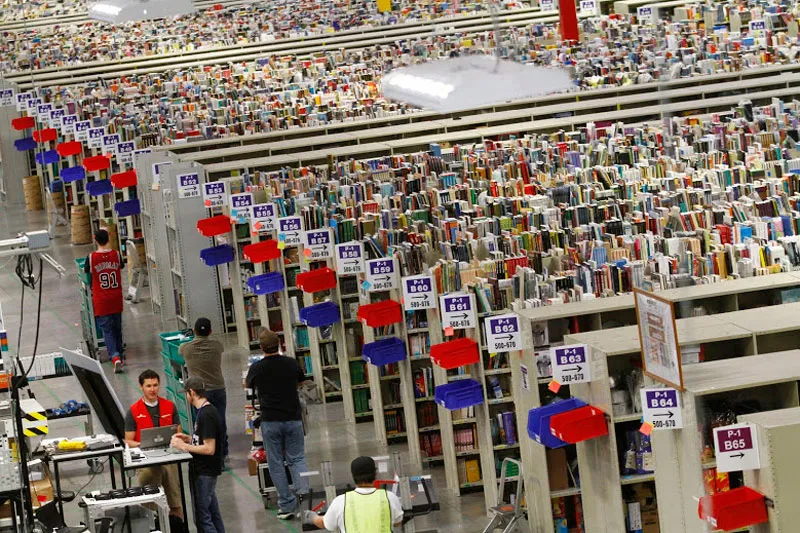
When we contemplate NTLStorage’s warehouse racking, we are witnessing a profound human achievement, not merely in the arrangement of steel and space, but in our species’ eternal quest to impose order upon the chaos of material existence, to create structures that defy entropy and organise the countless objects we have fashioned from the elements of dying stars.
The Cosmic Perspective on Vertical Organisation
In the vastness of the universe, gravity reigns supreme. It shapes galaxies, holds planets in their orbits, and determines the architecture of stars. Here on Earth, in our warehouses and distribution centres, we work within these same fundamental laws, creating structures that resist gravitational pull whilst exploiting vertical space. The warehouse racking system represents humanity’s dialogue with physics itself, a conversation conducted in steel and geometry.
Think about what happens when you place a thousand kilograms of goods four metres above the ground. You are creating potential energy, storing gravitational force that could, if released suddenly, cause destruction. The engineering that prevents this release is not merely practical but beautiful in its elegance.
The Elements of Structure
The materials comprising warehouse storage systems tell a story that spans billions of years. The iron in steel uprights originated in supernova explosions, scattered across space and eventually incorporated into our planet. We have extracted these elements, refined them, and shaped them into forms that serve our purposes:
Vertical Uprights
Cold-rolled steel columns that bear compressive loads whilst maintaining perfect vertical alignment, their molecular structure arranged to resist the constant downward pull of gravity.
Horizontal Beams
Spanning between uprights like bridges across chasms, these members distribute weight laterally, transforming point loads into manageable stress patterns.
Bracing Components
Diagonal elements that resist lateral forces, preventing the kind of cascading failures that occur when systems lose geometric stability.
Connection Points
The critical junctions where forces transfer from one component to another, designed with factors of safety that account for unpredictable real-world conditions.
Singapore’s NTLStorage’s warehouse racking installations embody these principles, adapted to local conditions but governed by the same physical laws that operate throughout the cosmos.
The Architecture of Efficiency
In nature, we observe systems that maximise efficiency within constraints. Trees compete for sunlight by growing upward, creating vertical forests where life exists in layers. Coral reefs build three-dimensional structures that support vast ecosystems within limited areas. Human warehouse storage follows similar patterns, not through evolution but through conscious design.
The vertical racking system transforms a two-dimensional floor into a three-dimensional storage matrix. This is necessary in places like Singapore, where land represents an extraordinarily scarce resource. The imperative to build upward here mirrors the pressures that shape life in competitive ecosystems.
The Dance of Forces
Every loaded warehouse rack participates in an intricate ballet of forces. Compression pushes downward through uprights. Tension pulls across beam connections. Shear stresses act at junctions. Torsional forces twist components when loads shift. These forces exist in dynamic equilibrium, balanced by the structural properties of steel and the geometry of the system.
When we examine NTLStorage’s warehouse racking closely, we see engineering that accounts for this complexity. The beam profiles are shaped to resist bending. The upright sections are designed to prevent buckling. The connections are engineered to transfer forces safely. This is applied physics at its most practical, yet it rests upon the same principles that govern structures throughout the universe.
Safety as Universal Principle
Throughout the cosmos, stable systems persist whilst unstable ones collapse. This principle applies as much to warehouse infrastructure as to planetary orbits. A properly designed and maintained racking system exists in stable equilibrium. Overload it, damage its components, or fail to maintain it, and you introduce instability that will eventually resolve itself, often catastrophically.
The safety features incorporated into modern warehouse storage systems reflect our understanding of failure modes:
- Column protectors shield vulnerable uprights from impact damage
- Safety locks prevent accidental beam displacement
- Load indicators remind operators of capacity limits
- Regular inspections identify developing problems before they become critical
These elements represent our acknowledgment that human systems, like natural ones, require maintenance and attention to persist over time.
The Human Endeavour
Step back and consider what we have achieved. From the raw materials of our planet, forged in stellar furnaces billions of years ago, we have created structures that enable modern commerce. These systems store the goods that sustain our civilisation, organised in three-dimensional matrices that defy gravity and maximise efficiency.
There is poetry in this achievement, though it is the poetry of engineering rather than verse. NTLStorage’s warehouse racking systems represent human intelligence applied to practical problems, our ability to understand physical laws and work within their constraints.
A Pale Blue Warehouse
From the vast perspective of cosmic time and space, our warehouses might seem trivial. Yet they represent something profound: a species that has learned to organise matter and energy to serve its needs, that understands the forces governing the universe well enough to build structures that persist and function reliably. In the grand sweep of cosmic evolution, this capacity for conscious engineering represents a remarkable development.
When we examine NTLStorage’s warehouse racking, we are witnessing not merely industrial equipment but a manifestation of human intelligence, our ongoing conversation with the physical laws that govern reality, conducted in steel and space and the eternal human quest to create order from chaos.









Comments